
From the USP Bench to the Clinic: How a Brazilian Translational Biotech Builds Regenerative Therapies
The valley between discovery and treatment
Every year, thousands of promising results in regenerative medicine are published — new cell sources, growth factors, biomaterials and algorithms that work in a dish or in an animal. Very few of them ever reach a patient. The distance between an academic finding and an approved product is known as the "valley of death": the stretch where a project needs GMP manufacturing, regulatory strategy, intellectual property, capital and clinical infrastructure that a university laboratory does not have and a large company will not provide until the risk is lower.
Translational biotech companies exist to cross that valley. Spero Science Innovation was founded in 2021 in São Paulo by orthopedic surgeon-scientists with exactly that purpose: to turn a decade of cartilage-regeneration research at the University of São Paulo into therapies, diagnostics and technologies that reach clinical practice.
An ecosystem, not a laboratory
What distinguishes Spero is the ecosystem it is embedded in.
Faculdade de Medicina da Universidade de São Paulo (FMUSP) is one of Latin America's leading medical schools, and its Institute of Orthopedics and Traumatology at Hospital das Clínicas HC-FMUSP houses the sports-medicine division where Spero's founders conduct their research and train graduate students in the musculoskeletal sciences program. HC-FMUSP is among the largest hospital complexes in Latin America, with a patient volume that makes it a natural site for clinical validation.
Hospital Sírio-Libanês, a private hospital with an internationally recognized teaching and research institute, is where the founders practice and where cell-therapy and biomaterials research is carried out in partnership with USP — including the GMP manufacturing of human mesenchymal stromal cells for cartilage regeneration that underpins Spero's Smart Cells platform.
Around these institutions sits an innovation infrastructure that Spero draws on directly: InovaHC, the technology-innovation hub of HC-FMUSP, where Spero's CEO serves on the innovation committee; Eretz.bio, the biotech hub of Hospital Israelita Albert Einstein; funding agencies FAPESP (São Paulo Research Foundation) and EMBRAPII (the Brazilian Company for Industrial Research and Innovation); SENAI and Sebrae for industrial and startup support; and diagnostic and industry partners such as Dasa, Mendelics and Genera. Spero's education arm runs the Scholars in Medical Innovation program and co-organizes the Hackathon Saúde HCFMUSP, which keeps the company connected to the next generation of clinician-innovators.
This network is why a company of Spero's size can run preclinical studies in a validated large-animal model, manufacture cells under GMP and design clinical trials with hospital partners — capabilities that would take a stand-alone startup years to assemble.
The science that came first
Spero did not start with a business plan; it started with published results.
Its founders developed a large-animal model of full-thickness cartilage defects in Brazilian miniature pigs (published in 2018 in Stem Cell Reviews and Reports), then used it to show that scaffold-free tissue-engineered constructs from synovial stromal cells, produced under GMP, significantly improve cartilage repair over six months by MRI and histology (Pharmaceutics, 2024). They led a systematic review and meta-analysis of 25 randomized trials on mesenchymal stromal cell therapy for knee osteoarthritis (Journal of Orthopaedic Translation, 2024) that defined where the clinical evidence stands and what better trials must look like. They co-authored the treatment algorithm for focal cartilage defects of the knee used internationally (Cartilage, 2021), edited a research topic on tissue engineering and cell therapy for cartilage restoration in Frontiers in Cell and Developmental Biology (2022), and contributed to biomaterials research on graphene-based scaffolds for bone regeneration (Journal of Biomaterials Applications, 2023).
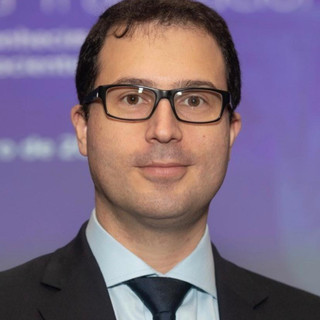
The CEO, Prof. Dr. Tiago Lazzaretti Fernandes, is Professor Livre-Docente at FMUSP, a former research fellow at Harvard University, and a member of ISAKOS, ICRS, ISCT, AAOS, SBOT and SBCJ; his awards include the ISAKOS Research Mentoring Program at Osaka University and the AAOS Stetson Powell International Scholarship. That academic foundation is the asset Spero translates.
The regulatory pathway: ANVISA and beyond
In Brazil, cell- and tissue-based products are regulated by ANVISA as advanced therapy products, with dedicated rules for manufacturing (GMP), preclinical evidence and clinical trials; injectable biologic therapeutics and software as a medical device follow their own frameworks. ANVISA's requirements are broadly aligned with those of the FDA and EMA, and Brazil participates in international regulatory harmonization initiatives.
Spero designs each program so that a single evidence package can support an ANVISA submission and later filings abroad. Practically, this means: GMP-compliant cell manufacturing from day one; preclinical studies in a model that regulators recognize; quantitative structural outcomes (MRI, histology) in addition to symptom scores; and clinical protocols built with hospital partners that can recruit at scale. Regulatory strategy is a design input, not an afterthought.
Why Brazil is a strategic base
Three features make São Paulo a strong base for musculoskeletal regenerative medicine. The clinical volume of HC-FMUSP and the private hospital network allows efficient trial recruitment. The population's genetic diversity makes evidence generated here more generalizable — and AI models trained here less biased — than data from single-ancestry cohorts. And the cost structure of preclinical and early clinical development is substantially lower than in the United States or Europe, without compromising on GMP or ethical standards. For international partners, a São Paulo-based translational company offers a route to first-in-human evidence and to the Latin American market at once.
Six platforms, one mission
Spero organizes its work in six platforms: Spero Holding (corporate governance and strategy), the Chondroinductive Molecule (injectable cartilage regeneration for osteoarthritis without surgery), Smart Cells (cell therapy and tissue engineering for cartilage, bone and tendon), Spero Science AI (multimodal musculoskeletal diagnostics), Spero OrthoTech (precision surgical tools and medical engineering) and Spero Education (healthcare-innovation education). They share a single mission: translating research into practice for patients with musculoskeletal disease.
Partner with us
Spero Science works with investors and venture funds, pharmaceutical and medical-device companies, hospitals and research institutions on equity investment, co-development, licensing, clinical collaboration and distribution. If your organization is interested in regenerative orthopedics, cell therapy or musculoskeletal AI in Brazil and Latin America, contact the Spero Science team or explore our platforms and institutional partners.
References
Fernandes TL, Shimomura K, Asperti A, et al. Development of a Novel Large Animal Model to Evaluate Human Dental Pulp Stem Cells for Articular Cartilage Treatment. Stem Cell Rev Rep. 2018;14(5):734-743. https://doi.org/10.1007/s12015-018-9820-2
Fernandes TL, Santanna JPC, de Faria RR, Pastore ER, Bueno DF, Hernandez AJ. Tissue Engineering Construct for Articular Cartilage Restoration with Stromal Cells from Synovium vs. Dental Pulp — A Pre-Clinical Study. Pharmaceutics. 2024;16(12):1558. https://doi.org/10.3390/pharmaceutics16121558
Tabet CG, Pacheco RL, Martimbianco ALC, Riera R, Hernandez AJ, Bueno DF, Fernandes TL. Advanced therapy with mesenchymal stromal cells for knee osteoarthritis: Systematic review and meta-analysis of randomized controlled trials. J Orthop Translat. 2024;48:176-189. https://doi.org/10.1016/j.jot.2024.07.012
Hinckel BB, Thomas D, Vellios EE, et al. (incl. Fernandes TL). Algorithm for Treatment of Focal Cartilage Defects of the Knee: Classic and New Procedures. Cartilage. 2021;13(1_suppl):473S-495S. https://doi.org/10.1177/1947603521993219
Fernandes TL, Bueno DF, Shimomura K, Shao Z, Gomoll AH. Editorial: Tissue Engineering and Cell Therapy for Cartilage Restoration. Front Cell Dev Biol. 2022;10:947588. https://doi.org/10.3389/fcell.2022.947588
Achôa GL, Mattos PA, Clements A, et al. (incl. Fernandes TL). A scoping review of graphene-based biomaterials for in vivo bone tissue engineering. J Biomater Appl. 2023;38(3):313-350. https://doi.org/10.1177/08853282231188805


Comments